
Download Light and Life
It can be one of your early morning readings Light And Life This is a soft file book that can be survived downloading and install from online book. As known, in this sophisticated age, technology will alleviate you in doing some activities. Also it is simply reviewing the visibility of book soft documents of Light And Life can be added attribute to open up. It is not just to open as well as conserve in the gadget. This time in the morning and also other leisure time are to review the book Light And Life
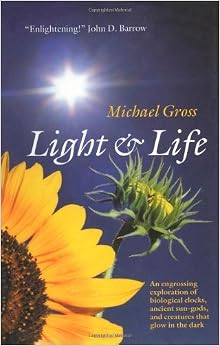
Light and Life

Download Light and Life
Currently available! Light And Life as the most wanted book worldwide. The book that is for grownups as well as teenagers are coming. You could have been waiting on this publication for lengthy moments. So, this is the right time to get it. Never ever play with the moment any longer, when you have the opportunity to obtain this book, why should play with it? When searching the title of this publication right here, you will directly see this web page. It will certainly position you to make much better selection of checking out book.
In investing the leisure time, lots of people have various ways. However, making the same one, reading the Light And Life can be done completely. Even it remains in different time, you all can get the features and also advantages of guide to review. It is sort of publication with the certain topic to conquer the everyday troubles. When you need kind of home entertainment, this publication is likewise suitable sufficient.
From the title, we will likewise show you the topic pertaining to define. When you in fact require this sort of resource, why do not you take it now? This book will certainly not just offer you the knowledge and lesson about the topic, from the words that are made use of, it specify brand-new enjoyable point. This Light And Life will make you really feel no worry to invest more time in analysis.
Taking this publication is likewise very easy. Check out the link download that we have offered. You can feel so satisfied when being the participant of this on-line collection. You can additionally discover the other publication compilations from all over the world. One more time, we here offer you not only in this type of Light And Life We as supply thousands of guides collections from old to the brand-new upgraded publication around the world. So, you might not be afraid to be left behind by recognizing this book. Well, not only know about the book, however understand what guide provides.
Review
"Excellent."--John D. Barrow
Read more
About the Author
Michael Gross is Science Writer in Residence at Birkbeck College, London, and a working researcher in protein biochemistry. He is the author of Life on the Edge, and his articles on science regularly appear in The Independent of London.
Read more
Product details
Hardcover: 176 pages
Publisher: Oxford University Press; First Printing edition (July 31, 2003)
Language: English
ISBN-10: 0198564805
ISBN-13: 978-0198564805
Product Dimensions:
8.6 x 0.9 x 5.7 inches
Shipping Weight: 12.2 ounces (View shipping rates and policies)
Average Customer Review:
5.0 out of 5 stars
1 customer review
Amazon Best Sellers Rank:
#1,738,517 in Books (See Top 100 in Books)
_Light and Life_ by Michael Gross is a brief overview of a variety of instances in which light - from the Sun and other sources - and life on Earth have interacted. A rather short book - not counting the suggestions for further reading it, is 149 pages - I found it an enjoyable, quick read. Though at times it got a bit technical, for the most part it was accessible and interesting. After a brief preface describing some very general observations as to why light is important in understanding life on Earth and as to why the author decided to explore this topic, the author divided the book into six chapters, each with a different focus. The first chapter really dealt with astronomy rather than with biology. In this section Gross explored the Big Bang, the origins of stars, the formation of the solar system, and the structure and functioning of the Sun. I found this chapter pretty general, mostly things I had read before, though a good overview. I did find his discussion of the left over radiation from the early universe, the cosmic microwave background, or CMB, interesting. Though its existence was predicted in 1948 by physicist George Gamow, it was only discovered 17 years later by accident, when Arno Penzias and Robert Wilson at Bell Laboratories were trying to determine the source of the excessive background radiation picked up by a microwave antenna that they had designed to receive satellite transmissions. A two-page discussion on neutrinos, while a bit off-topic, was also quite interesting, where the reader will learn about the massive devices built underground in attempts to observe these elusive and extremely difficult to detect particles that come from our Sun and other stars. The second chapter was much more in line with the book's title, dealing with photosynthesis, including its evolution, the effects it has had on the geology, climate, and evolution of life on this planet, and how it is accomplished at the chemical level (this latter subject did get a bit technical but there were some helpful diagrams). Also discussed is the ozone layer, its formation, its importance to life, and the threats posed to it by pollution (with some discussion as to why certain pollutants interact with ozone). Chapter three was quite interesting, veering away from the Sun and Sun-related topics, focusing instead on the world of bioluminescent organisms. One interesting point he made, when discussing ecosystems that form around hydrothermal vents, seemingly independent of the Sun, is that ultimately they still benefit from photosynthesis due to their reliance on oxygen, which is present in usable quantities thanks to the activities of photosynthetic organisms. Gross made many interesting observations about bioluminescence. It is found in a rather diverse group of organisms with little apparent rhyme or reason. It is fairly common in the ocean, virtually absent in freshwater. Various groups of worms and insects can glow, but no spiders. Among vertebrates, only fish use it. There appears to be 30 non-related bioluminescent systems in nature, possibly meaning 30 separate incidents of independent evolution. Gross discussed the idea put forth by William D. McElroy and H. H. Seliger that originally the first such system did not evolve to produce light but rather to detoxify the oxygen that was introduced into the atmosphere by cyanobacteria (as most bioluminescent systems use oxygen). Later on, mitochondria were able to use and dispose of the oxygen much more effectively. The book explored how light is produced in organisms and its many possible uses, including seeing, sexual signaling, alarm signals, bait, to deceive predators, and, what was interesting to me, "no use." Sometimes light appears to be an unwanted byproduct or at least produced for little understood reasons, such as is the case with luminescent fungi. The many uses of bioluminescence by humans were explored. One interesting use related to detecting landmines; all landmines leak small quantities of TNT; researchers have developed a strain of bacteria (one that naturally feeds on this chemical) so that it would glow under a UV lamp. Chapter four explored biological clocks and movement guided by light, including photokinesis (light causing increased activity), phototaxis (light being an attractive signal to which an organism will run towards, phototaxis affecting both orientation and displacement of an organism), and phototropism (as when a plant grows or bends towards light). Also discussed in this chapter was the importance of sunlight to human health physically and psychologically. Interesting was a discussion as why peoples native to the tropics have darker skin; it has nothing to do with skin cancer, which only develops late in life, well beyond their reproductive age. Rather, it has to do with vitamin D synthesis (dark skin and low light would make for problems) and the destruction of folic acid (less often damaged in dark skinned people). Chapter five was quite interesting, dealing with the evolution and structure of eyes in the animal kingdom, though largely focusing on the human eye. I learned many things I did not know, including about why cataracts form, color blindness (first systematically analyzed by an individual who suffered from it, John Dalton, more famous for the modern concept of the atom), saccades and trans-saccadic memory (saccades are rapid eye movements performed unaware to us up to three times a second, and the trans-saccadic memory creates continuity between images before and after a saccade, though studies have shown very interestingly that this memory is more schematic than detail-oriented; fascinating reading), and binocular rivalry (what happens when the eyes are presented with two separate, incompatible images, resulting not in a blending of the images or two images but rather an alteration of two competing images at apparently random time intervals, though this is to some extent influenced by conscious thought). The final chapter was one of the briefest, providing some highlights of Sun worship through the ages and past thinking about light and vision. We've come a long way from the ancient Greek philosopher Empedocles' idea of "vision rays."
Light and Life PDF
Light and Life EPub
Light and Life Doc
Light and Life iBooks
Light and Life rtf
Light and Life Mobipocket
Light and Life Kindle
0 comments:
Post a Comment