
Get Free Ebook Looking for the Lost: Journeys Through a Vanishing Japan (Kodansha Globe), by Alan Booth
The method to get this publication Looking For The Lost: Journeys Through A Vanishing Japan (Kodansha Globe), By Alan Booth is really simple. You could not go for some areas as well as invest the time to just find the book Looking For The Lost: Journeys Through A Vanishing Japan (Kodansha Globe), By Alan Booth As a matter of fact, you could not constantly obtain the book as you want. However here, just by search and find Looking For The Lost: Journeys Through A Vanishing Japan (Kodansha Globe), By Alan Booth, you could get the lists of guides that you truly anticipate. Often, there are lots of books that are revealed. Those publications naturally will certainly amaze you as this Looking For The Lost: Journeys Through A Vanishing Japan (Kodansha Globe), By Alan Booth collection.
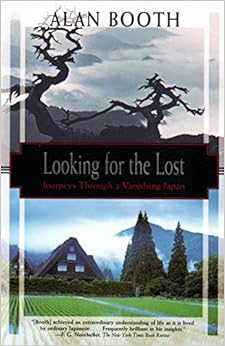
Looking for the Lost: Journeys Through a Vanishing Japan (Kodansha Globe), by Alan Booth

Get Free Ebook Looking for the Lost: Journeys Through a Vanishing Japan (Kodansha Globe), by Alan Booth
There are many pointers that people use to enhance the life quality, regarding whatever. Below, we also will certainly offer you a really simple suggestion to life better. Checking out Looking For The Lost: Journeys Through A Vanishing Japan (Kodansha Globe), By Alan Booth is our suggestion. Please ask why we suggest this book to review. Many people attempt to make themselves to be rich, but sometime they ignore a very simple thing. Reviewing is in fact a basic point, but lots of slouch to do it. It's kind of dull task and also waste the moment.
If you ally require such a referred Looking For The Lost: Journeys Through A Vanishing Japan (Kodansha Globe), By Alan Booth book that will certainly give you value, obtain the best seller from us currently from several popular publishers. If you wish to amusing books, many books, tale, jokes, as well as a lot more fictions compilations are additionally launched, from best seller to one of the most current released. You might not be perplexed to appreciate all book collections Looking For The Lost: Journeys Through A Vanishing Japan (Kodansha Globe), By Alan Booth that we will provide. It is not about the costs. It's about what you need currently. This Looking For The Lost: Journeys Through A Vanishing Japan (Kodansha Globe), By Alan Booth, as one of the very best sellers below will be one of the right selections to read.
This book has to be had by everyone that enjoy analysis or have reading routine. You can take extra advantages of reading Looking For The Lost: Journeys Through A Vanishing Japan (Kodansha Globe), By Alan Booth The lesson of this book is not constantly the facts. It will certainly be additionally such thing that will make you amazed of this publication. You understand, in undertaking this life, lots of people must have the experience and knowledge from lots of sources. It is to make certain that you could follow up the way of exactly how some individuals life.
This is additionally one of the factors by obtaining the soft documents of this Looking For The Lost: Journeys Through A Vanishing Japan (Kodansha Globe), By Alan Booth by online. You might not require more times to invest to see the e-book store and also search for them. Sometimes, you additionally don't find the book Looking For The Lost: Journeys Through A Vanishing Japan (Kodansha Globe), By Alan Booth that you are hunting for. It will squander the time. But below, when you see this web page, it will certainly be so simple to obtain as well as download the e-book Looking For The Lost: Journeys Through A Vanishing Japan (Kodansha Globe), By Alan Booth It will certainly not take often times as we mention previously. You can do it while doing something else in your home and even in your workplace. So easy! So, are you doubt? Merely exercise just what we provide here and also review Looking For The Lost: Journeys Through A Vanishing Japan (Kodansha Globe), By Alan Booth just what you like to check out!
Review
"[Booth] achieved an extraordinary understanding of life as it is lived by ordinary Japanese....Frequently brilliant in his insights."—F.G. Notehelfer, The New York Times Book Review"Alan Booth was not only the best travel writer on Japan, but one of the best travel writers in the English language. Looking for the Lost is a superb exercise in describing Japan from the point of view of an outsider with the knowledge of an insider."—Ian Buruma, author of The Wages of Guilt"Booth had a horror of pretension....[He] never fails to produce the whimsical anecdotes that keep the whole account down-to-earth."—Elizabeth ward, Washington Post Book World
Read more
From the Back Cover
In his final work Alan Booth takes us on a fascinating journey by foot through three remote regions of Japan to search for the country's geographic and spiritual heart - and for the elusive connections between present and past, self and society. Looking for the Lost is a beautifully written, opinionated, and entertaining look at the life and slow death of a culture, and a poignant self-portrait of a writer also nearing death. Booth's journeys begin in the far north, in the homeland of modern Japan's most famous outcast, the decadent novelist Osamu Dazai. His often hilarious encounters in the towns along the lonely, underdeveloped coast where Dazai grew up reveal a region caught between change and tradition, where the effects of Japan's economic miracle are only now being felt. Booth then explores the tangled wilds of southern Kyushu - the battlegrounds where Saigo Takamori, one of Japan's most-loved tragic heroes, led his small rebel army in a futile last stand against overwhelming government forces in 1877. Finally he turns to the mountains and rivers in central Japan where the Heike clan, defeated by the Genji in the epochal twelfth-century civil war, were said to have dispersed. The bloody fall of the Heike marked the decline of refined court culture, an aristocratic golden age that Japan still clings to, however tenuously, in a time of love hotels, tourist traps, and industrial sprawl.
Read more
See all Editorial Reviews
Product details
Series: Kodansha Globe
Paperback: 400 pages
Publisher: Kodansha Globe; New edition edition (May 15, 1996)
Language: English
ISBN-10: 1568361483
ISBN-13: 978-1568361482
Product Dimensions:
5.6 x 1 x 8.4 inches
Shipping Weight: 1 pounds (View shipping rates and policies)
Average Customer Review:
4.6 out of 5 stars
20 customer reviews
Amazon Best Sellers Rank:
#335,099 in Books (See Top 100 in Books)
I was really impressed with Alan Booth's Roads to Sata and was relishing the chance to read his follow up, Looking For The Lost (1995). And again I was impressed, the first section, "Tsugaru" is Booth's retracing the path of Aomori author Osamu Dazai, who was famous for his writing and booze fueled life and many suicides attempts-one of which, was successful. The name of Dazai's book that Booth uses as his guide of the region was Return to Tsugaru: Travels of a Purple Tramp, which gave Both points of reference even though that trip was undertaken 50 years earlier. In the book Booth tells a waitress at the inn that was once Dazai's home that he wasn't particularly a fan-and I can believe it. (I'm not such a huge fan of a selfish miserable man either) I think it was merely a good excuse for him to explore this remote northern-most region of Honshu-an area that he professed his love for earlier and mentioning that when he first arrived in Japan he lived just south of Amori in Akita prefecture. I know very little of the region save its regional products, the Namahage devil festival / costumes, and the famous colorful float festival known as the Nebuta festival. But his observations of the people and region are intriguing. He was particularly impressed with Hirosaki, which he called one of his favorite places in Japan.In the second section, "Saigo's Last March," Booth follows in the footsteps of Saigo Takamori's famous retreat from Mount Enodake in the northern part of Miyazaki prefecture through mountains down to his home town of Kagoshima. I suppose I would liked to read more about Takamori and his impact on modern Japan sometime. However, in this sparsely populated area Booth has many false starts and he is not able to keep up with Takamori's timetable for the march. Along the way locals tell him the history of Takamori's doings in their villages during his long march home. As usual, beer is drank, chats are had, and this trip seems more miserable than others because of the constant rain he encounters on his walk. Again wry observations about the people and Booth's impressions are made as well. Of those two prefectures I have only been to the main cities of Miyazaki and Kagoshima, so the descriptions of the rugged land is somewhat of a revelation-however, the impression was made on trips from the airports into the main cities on those trips.In the final section, "Looking for the Lost," Booth attempts to follow and explore the retreat of the Heike (also known as the Taira) clan that was said to have been chased out of Kyoto into the north most likely along the Nagara River. Like the previous two entries there are witty exchanges with locals, more wry observations, and more historical recounting. However, this section also tells the reader more about the author and his obsessions that brought him to Japan in the first place, and why he abandoned them. This is triggered by the staid historical museums and preserved houses for tourism that are scattered about the region: "I was reminded,strolling around the breezy paths, of why I had come to Japan in the first place-not in search of the coyly picturesque but of something I had thought might be living and was dead." "So culturally edifying is the Noh that great pains have been made to pickle it. like much else in Japan that is deemed worthy of awe, the Noh has been stripped of any connection with life as it is actually lived and frozen into a fossil."But rather than retreat, he finds other interests that keep him in Japan writing about the land, the people, the culture, and the customs as he experienced them firsthand on his travels. The books ends with a powerful prophecy of the author's future. It is a fitting companion to his earlier masterpiece The Roads to Sata. Booth has earned a rightful place among the ranks of the best visitors who wrote so insightfully about Japan like Donald Richie and Ian Buruma.
...but the encounters along the way,, usually over beer, that make the journey significant. The Roads to Sata: A 2000-Mile Walk Through Japan, which I read a year and a half ago, was my introduction to the works of Alan Booth. It is the account of his journey - walking every step of the way - across the four principal islands of Japan, from the very northern tip of Hokkaido to Cape Sata, at the southern tip of Kyusha. (He exhibits his droll wit by describing his insistence never to take a vehicle, even over short distances, as his "Protestant Walk Ethic"). It was a long walk of 2,000 miles. Given his fondness for beer (he never mentions, ever, drinking water), he notes in the present volume that one reviewer called The Roads to Sata: A 2000-Mile Walk Through Japan a "...2,000 mile pub crawl." In the process though, Booth reveals that he is an incisive observer of the Japanese, and a Japan that is beyond the experience of virtually all non-Japanese speakers. He had come to Japan in 1970 to study Noh theater, married a Malaysian of Chinese decent, and decided to stay, becoming fluent in the language as part of the process. This would be his last work, published posthumously. He died of cancer in 1993.Booth's last work is composed of three parts. Each part is structured around a hike of two to four weeks. The travelogue part covers sore feet, welcoming to rude ryokan innkeepers, and, for anyone thinking of duplicating these trips, a LOT of rain. But then, at least he is not camping in it. Even by the late `80's, there is still the general assumption of many he meets that he cannot speak (or read) Japanese because he is a gaijin (foreigner). But his wanderings are not random; he structures them around a historical personage or event, and thus the "looking" (or, as Proust would say, the "searching") for the impact of the past on the present.In the first two trips, he went to "extremes" of sort. Although he did not visit the northern most island, Hokkaido, this time, he did hike the Tsugaru peninsula, in far northwestern Honshu (which is the largest island). It is May, and cold, though the cherry blossoms will soon be abloom. He decides to follow the travelogue of Dazai Osamu, who journeyed in this area in 1944, during the final year of World War II for the Japanese. Osamu was certainly a strange character, who attempted suicide on four occasions, and succeeded on the fifth. Booth, in his humorous way, debunks and disputes much of Dazai's account. Still, many in the region recognize him for placing this remote peninsula on the "tourist map." The second trip is in the far south, on the island of Kyushu, in the heat of August. Booth wanted to retrace the steps of the defeated army of "the lost cause," at the same time of year that it had actually occurred. It was the last "civil war" on the main islands of Japan. Saigo Takamori, much romanticized in the region, led the revolt of the last of the samurai class. Swords against the guns of the central government, with predictable results. Saigo did his own version of Mao's "the long march", and it taxed Booth to keep up with the schedule. The third trip was in the middle, starting from Nagoya, which had to be completely rebuilt after WW II bombing. (Fittingly, the town is located between Kyoto and Tokyo (Edo, as it was once called). Booth is chasing down the remnants of a much earlier conflict, which commenced in 1180, and lasted five years. This is related in The Tale of the Heike, a constant companion of sorts. The winners might write the history, but Booth demonstrates that it is the losers that write the literature. After the Kyoto faction was defeated, the remnants fled into the remote mountainous regions of the "spine" of Honshu... one of the town's names, Taira, is probably derived from a leader of the Heike. Many of the houses in this region have roofs that are thatched, and steeply pitched, because of the snow. But those that can repair them are dying off, with no replacements, and Booth predicts that, say, by now, only a few at designated "tourist spots" will remain.The book is replete with wise observations. A chapter that resonated with me is entitled "Pickled Culture", and it reflected my one experience with the Noh theater. And by someone who had come to Japan to study it. He says: "...(a Noh production) is about as comprehensible to a cross-section of modern Japanese society as an oral rendition of Beowulf in the original would be to a cross-section of modern British society."Finally, what he calls the "niggling" in his gut was felt when he crossed the spine of Honshu, which would be diagnosed as cancer, 27 months later, and to which he would succumb. A keen observer, with a humanist heart, and I wish we could have shared a beer. He is missed. 5-stars, plus.
I first read Alan Booth's books when I was living in Kyushu, and wanted to learn more about Saigo Takamori. His tale of trying to trace Saigo's epic trek through the back mountains of Miyazaki mixed scholarship and the travel essay brilliantly, and made me want to learn more -- though definitely not to retrace the steps! The author's fatigue and misdirections were skilfully reflected in passages on the physical torments Saigo Takamori endured. The reader feels like he is peeking into the period of the Satsuma rebellion and will feel grateful to return to modern time. Booth's affection for Japan is not without exasperation, but is limned by an acceptance of himself and Japanese society that borders on the luminous. You might appreciate some of his reflections more if you have lived in Japan, but no historian or connoisseur of language can fail to appeciate his writing, which deftly moves between the philosophical, the absurd, and the purely human.
If you're sick of the usual "Japan is a country of opposites"-type schlock that appears in mot travelogue about Japan, then "Looking for the Lost" (or Booth's other book, "The Roads to Sata") are wonderful antidotes.Through simple, real-life observations and exchanges -- no grandiose oversimplifications and cliches here! -- Booth presents the complexity, silliness, friendliness, biases, perspectives, history, modernity, antiquity and culture of the Japan beyond the big cities.As a Tokyoite for seven years (transplanted from NYC), I can say without equivocation that Booth's two tomes are the most accurate, truest, loveliest texts you will ever read about the country.
Looking for the Lost: Journeys Through a Vanishing Japan (Kodansha Globe), by Alan Booth PDF
Looking for the Lost: Journeys Through a Vanishing Japan (Kodansha Globe), by Alan Booth EPub
Looking for the Lost: Journeys Through a Vanishing Japan (Kodansha Globe), by Alan Booth Doc
Looking for the Lost: Journeys Through a Vanishing Japan (Kodansha Globe), by Alan Booth iBooks
Looking for the Lost: Journeys Through a Vanishing Japan (Kodansha Globe), by Alan Booth rtf
Looking for the Lost: Journeys Through a Vanishing Japan (Kodansha Globe), by Alan Booth Mobipocket
Looking for the Lost: Journeys Through a Vanishing Japan (Kodansha Globe), by Alan Booth Kindle
0 comments:
Post a Comment