
PDF Download Situation Ethics: The Modern Morality
When you're a novice visitor or the one that try to begin love reading, you can pick Situation Ethics: The Modern Morality as the most effective option. This book is preferred amongst the viewers. This is just one of the reasons we advise you to attempt reading this book. Even this is not sort of book that will give large chance; you can get it step by step. As just what we constantly became aware of discovering can be done by steps. You can't get to the knowledge at once by doing whatever, it will certainly need some procedures.
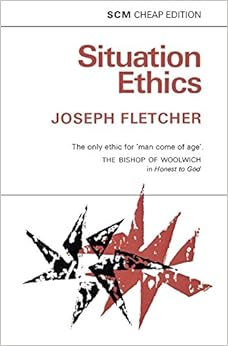
Situation Ethics: The Modern Morality

PDF Download Situation Ethics: The Modern Morality
Tale of the pastime and life of everyone will certainly be distinctive. The experience, experience, understanding, as well as life has actually be done end up being the elements of the problem. Nonetheless, age doesn't end up being the reason of just how an individual ends up being smarter. To be a clever person, many ways can be done. Discovering vigilantly, discovering by doing and also practicing, obtaining experience and also knowledge from other people, and obtaining resources from the book end up being the methods of being smarter.
Now, your time is to create the various atmosphere of your daily life. You may not feel that it will certainly be so quiet to recognize that this publication is absolutely yours. And also how you could await the book to read, you could simply find the link that has actually been given in this site. This site will certainly provide you all soft duplicate fie of guide that can be so easy to learn more about. Connected to this problem, you can truly understand that guide is attached always with the life as well as future.
However, some individuals will certainly seek for the best seller publication to read as the initial referral. This is why; this Situation Ethics: The Modern Morality exists to fulfil your necessity. Some people like reading this publication Situation Ethics: The Modern Morality because of this prominent publication, however some love this as a result of favourite writer. Or, lots of also like reading this publication Situation Ethics: The Modern Morality considering that they really have to read this book. It can be the one that really like reading.
When a number of them are still puzzled of how you can get this publication, you have been here. The appropriate place to find lots of book classifications consisted of Situation Ethics: The Modern Morality It's so easy to obtain just how this publication is exposed. You could only go to, look, and also find the title of guide that you wish to obtain. Numerous books from numerous resources as well as countries are presented. So, you might to visit various other site to find the specific publications to have today.
Product details
Paperback: 178 pages
Publisher: SCM Press; n.e. edition (June 19, 2012)
Language: English
ISBN-10: 0334015383
ISBN-13: 978-0334015383
Product Dimensions:
5.2 x 0.4 x 8 inches
Shipping Weight: 7 ounces (View shipping rates and policies)
Average Customer Review:
5.0 out of 5 stars
2 customer reviews
Amazon Best Sellers Rank:
#1,156,012 in Books (See Top 100 in Books)
A lot less "situation ethics" and a lot more Christianly love than I expected.
Joseph Francis Fletcher (1905-1991) was an American professor who propounded the theory of “Situational Ethics†in the 1960s, and was a pioneer in the field of bioethics. Once ordained as an Episcopal priest [he taught Christian Ethics at Episcopal Divinity School and at Harvard Divinity School from 1944 to 1970], he later identified himself as an atheist. He was active in the Euthanasia Society of America, the American Eugenics Society, and the American Humanist Association [which named him “Humanist of the Year†in 1974]. He wrote other books, such as The Ethics of Genetic Control,Humanhood,Morals and Medicine, etc. [NOTE: page numbers below refer to the 176-page 1966 paperback edition.]He wrote in the Foreword to this 1966 book, “Over the years, as I have lectured on non-Christian systems of ethics, comparing them to various Christian systems, I have sometimes included my own NONsystem. It is this ‘nonsystem’ which is set forth in capsule form in these pages. In some cases my critics… have argued that my point of view actually represents a Christian system of nonethics… The reader will find a method here, but no system. It is a method of situational’ or ‘contextual’ decision-making, but system-building has no part in it… I am inclined to say that ANY ethical system is unchristian or at last sub-Christian, whatever might be its claim to theological orthodoxy.†(Pg. 11-12)He continues, “As Paul Ramsey has pointed out, with some distaste, my approach is both personalistic and contextual. These seem to me to be the two main features of Christian situationism. But I should make clear … what is meant to ‘contextual’ in this book… Christian action should be tailored to fit objective circumstances, the SITUATION… the word is applicable to any situation-sensitive decision-making, whether its ideology is theological or nontheological.†(Pg. 14) He adds, “except for a stress on the normative ideal of ‘love’---always carefully distinguished as New Testament ‘agape.’ My reason is that the basic challenge offered by the situationist has nothing to do in any special way with theological over against nontheological faith commitments.†(Pg. 15)He further explains, “The temptation is to drop the word ‘love’ altogether in Christian ethical discourse, to use only the New Testament word ‘agape’… but in this book I have kept it---with some explanation. The word is too rich, with too much important and legitimate meaning over and beyond its technical meaning in New Testament theology, to throw it away ruthlessly… I am somehow impressed with the wealth of content in C.S. Lewis’ The Four Loves.†(Pg. 15)He begins the first chapter with the statement, “There are at bottom only three alternative routes of approaches to follow in making moral decisions. They are: (1) the legalistic; (2) the antinomian… i.e., a lawless or unprincipled approach; and (3) the situational. All three have played their part in the history of Western morals…†(Pg. 17)He explains the situationist approach: “The situationist enters into every decision-making situation fully armed with the ethical maxims of his community and its heritage, and he treats then with respect as illuminators of his problems. Just the same he is prepared in any situation to compromise them or set them aside IN THE SITUATION if love seems better served by doing so. Situation ethics goes part of the way with natural law, by accepting reason as the instrument of moral judgment, while rejecting the notion that the good is ‘given’ in the nature of things, objectively. It goes part of the way with Scriptural law by accepting revelation as the source of the norm while rejecting all ‘revealed’ norms or laws but the one command---to love God in the neighbor. The situationist follows a moral law or violates it according to love’s need.†(Pg. 26) He adds, “Situation ethics… calls upon us to keep law in a subservient place, so that ONLY love and reason count when the chips are down!†(Pg. 31)He notes, “Using terms made popular by Tillich and others, we must say that Christian situationism is a method that proceeds… from (1) its one and only law, agape (love), to (2) the ‘sophia’ (wisdom) of the church and culture, containing many ‘general rules’ or more or less reliability, to (3) the Kairos (moment of decision, the fulness of time) in which the responsible self in the situation decides whether the sophia can serve love there, or not. This is the situational strategy in capsule form.†(Pg. 33)He observes, “situation ethics … holds flatly that there is only one principle, love, without any prefabricated recipes for what it means in practice, and all other so-called principles or maxims are relative to particular, concrete situations! If it has any rules, they are only rules of thumb.†(Pg. 36) Later, he adds, “The situationist avoids words like ‘never’ and ‘perfect’ and ‘always’ and ‘complete’ as he avoids the plague, as he avoids ‘absolutely.’†(Pg. 43-44)He states, “Situation ethics puts people at the center of concern, not things. Obligation is to … subjects, not objects. The legalist is a WHAT asker (What does the law say?); the situationist is a WHO asker (Who is to be helped?). That is, situationists are personalistic. In the Christian version, for example, a basic maxim is that the disciple is commanded to love people, not principles or laws or objects or any other THING.†(Pg. 50) He adds, “Situation ethics keeps principles sternly in their place, in the role of advisers without veto power!†(Pg. 55)He elaborates, “It means… that there are no universals of any kind. Only love is objectively valid, only love is universal… The situationist holds that whatever is the most loving thing in the situation is the right and good thing. It is not excusably evil, it is positively good.†(Pg. 64-65)He quotes the First Commandment, then comments, “one could surely PRETEND to have no faith in God, or in any combination of gods, if it were necessary for loving cause. We could make a formal or false apostasy under persecution for the sake of dependents or the life of an illegal underground church. If the First Commandment is meant to prohibit atheistic or non-Yahwistic declarations, then it becomes like other laws and can be broken for love’s sake. God knows the secrets of the heart; he also knows when he is denied falsely and lovingly, and he also knows when he is acclaimed falsely and unlovingly.†(Pg. 72)He asks, “What else could make a thing lawful, according to the only left in the New Testament, i.e., Jesus’ summary? The answer is clear. Nothing. Nothing makes a thing good except agapeic expedience; nothing CAN justify an act except a loving purpose.†(Pg. 125)He summarizes, “Acknowledging that every moral decision involves … the ends, the means, the motives, and the foreseeable results…then there appears to the Christian situationist to be nothing particularly different or unique in a Christian’s choices---except as to motive… What, then, is it that is special? The answer must be … that the Christian’s love is a RESPONSIVE love. Christian love is… of thanksgiving to God for what he has done for us, for mankind, especially in the life, death, and resurrection of Jesus Christ… It is distinct from other moralities only because of its reason FOR righteousness, not by its standards OF righteousness… what makes it different is a theological factor; the faith affirmation that God himself suffered for man’s sake to reconcile the world in Christ. From this faith follows gratitude, a loving response to God’s love…†(Pg. 155-156)He concludes, “In a free society we have no official ethics any more than we have an official faith or political philosophy. But we can have a moral consensus. After all, it is not necessary to agree on an ethic to achieve living unity just as we need not hold a common epistemology or theory of knowledge to have an agreed body of scientific learning. Situation ethics is the most promising road to a moral community.†(Pg 158-159)Looking at this book from a fifty-years-later viewpoint, one is perhaps most surprised to see how “Christianly†Fletcher’s approach originally was---particularly in light of his later secularist and atheistic approach.Persons interested in this issue may also want to read The Situation Ethics Debate and Situation Ethics: True or False?.
Situation Ethics: The Modern Morality PDF
Situation Ethics: The Modern Morality EPub
Situation Ethics: The Modern Morality Doc
Situation Ethics: The Modern Morality iBooks
Situation Ethics: The Modern Morality rtf
Situation Ethics: The Modern Morality Mobipocket
Situation Ethics: The Modern Morality Kindle
0 comments:
Post a Comment